kaybin
Industrial Rubber & Polyurethane Bushes
Industrial Rubber & Polyurethane Bushes
Or email us directly at info@kaybin.co.za with the product name and quantity.
Industrial Rubber & Polyurethane Bushes for Shock, Vibration & Load Control
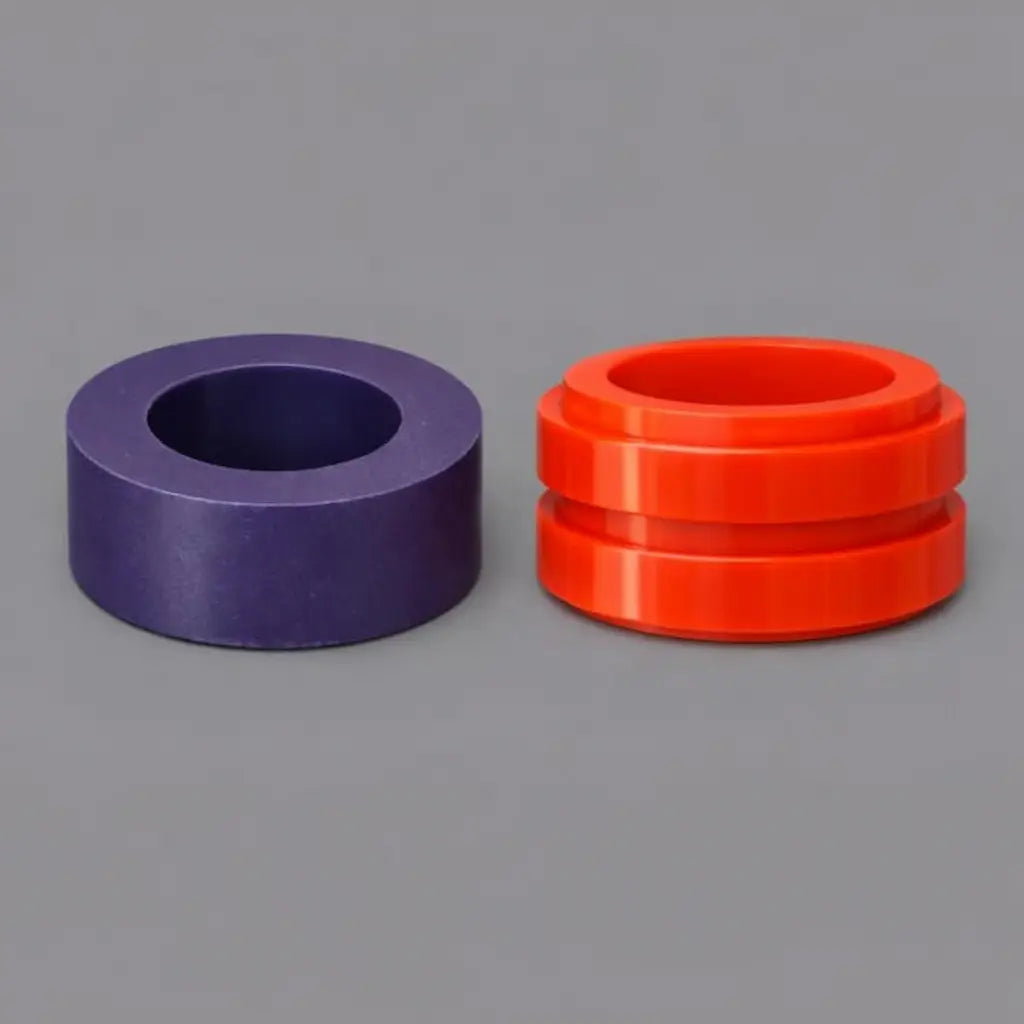
Kaybin manufactures custom industrial rubber bushes, bonded rubber-to-metal bushes and polyurethane (PU) bushes for OEM and maintenance applications where vibration isolation, controlled compliance, shock absorption and wear resistance are critical.
Bushes are moulded or machined to drawing, sample or reverse-engineered specification and configured for radial, axial and torsional loads in mining, materials handling, process plant and heavy-duty industrial equipment across South Africa and Africa.
Boundary: This page covers industrial elastomer and polyurethane bushes — not automotive aftermarket suspension kits.
Bush Types Covered
- Plain rubber sleeve bushes
- Flanged rubber bushes
- Bonded rubber-to-metal bushes (inner and/or outer sleeve)
- Crush-tube / torque-through bonded bushes
- Elastomer bearing bushes for pivot joints
- Solid polyurethane (PU) bushes
- PU bushes with metal or polymer inserts
- Custom geometries for large diameters or split installation
Rubber Bushes (Elastomer Bearing Bushes)
Rubber bushes are typically selected where controlled compliance and vibration isolation are required. In bonded configurations, the elastomer works in shear between inner and outer sleeves to accommodate torsional movement while supporting combined radial and axial loads.
Typical Applications:
- Conveyor pivots and linkages
- Vibratory feeders and handling systems
- Pump and motor mounting points
- General machinery pivot bearings
Common Rubber Compounds
- NBR – oil and hydraulic exposure
- EPDM – water and outdoor service (not oil)
- Neoprene (CR) – balanced oil and weather resistance
- Natural Rubber – high resilience and dynamic response
- Silicone – elevated temperature applications
Shore A hardness and geometry are selected based on required stiffness, allowable deflection, load direction and service environment.
Polyurethane (PU) Bushes
Polyurethane bushes are selected where rubber wears prematurely due to abrasion, tearing, contamination or higher structural load demand. PU combines elastomeric resilience with improved wear resistance and dimensional stability.
Typical Applications:
- High-load conveyor pivot points
- Dirty or slurry-exposed equipment
- Handling machinery with impact and abrasion
- Applications requiring extended service intervals
PU Grade Considerations
- Shore A grades – increased compliance and shock absorption
- Shore D grades – higher stiffness and structural support
- Oil-resistant, abrasion-resistant and UV-stable grades (application dependent)
Material selection is based on load profile, motion type (oscillating, rotating or linear), misalignment, environmental exposure and required service life.
Rubber vs Polyurethane – Selection Overview
- Rubber bushes – optimised for vibration isolation and compliance-driven joints
- PU bushes – optimised for wear resistance and dimensional stability under load
- Rubber generally offers superior vibration damping
- PU generally offers improved abrasion and tear resistance
Correct material choice balances stiffness, deflection, wear resistance and environmental compatibility.
Engineering & Performance Considerations
Design review typically considers:
- Radial, axial and torsional load directions
- Oscillation angle and cycle frequency
- Static vs dynamic stiffness behaviour
- Shear strain under cyclic loading
- Press-fit interference and sleeve retention
- Thermal expansion and creep under sustained load
- Exposure to oil, slurry, water, chemicals and UV
Proper specification helps prevent premature wear of shafts and housings while maintaining predictable compliance and vibration control.
Common Failure Modes Addressed
- Debonding in bonded bush assemblies
- Cracking or fatigue under cyclic load
- Compression set and loss of stiffness
- Creep deformation under sustained load
- Fretting and housing wear
- Sleeve spin due to incorrect interference fit
Material grade, geometry and fit are reviewed prior to manufacture to reduce these risks.
How to Measure & Specify
To manufacture the correct bush, provide:
- ID (shaft/pin diameter), OD (housing bore) and length
- Flange details (if applicable)
- Bonded configuration requirements (inner sleeve, outer sleeve, crush tube)
- Motion type: oscillation, rotation or torsion angle
- Load direction: radial, axial, torsional and shock profile
- Operating environment: oil, slurry, water, chemicals, UV exposure
- Installation method: press-fit, bonded assembly or sleeve configuration
Drawings, CAD files, photos or samples assist accurate reverse engineering.
Replacement & OEM Support
- Replacement rubber and polyurethane bushes
- Replication of discontinued OEM bush assemblies
- Material upgrades (rubber to PU where duty requires)
- Geometry tuning for stiffness and deflection targets
- Small-batch and production manufacturing
Industrial rubber and polyurethane bush solutions supplied across South Africa and Africa.
Share