kaybin
Oil Seals & Rotary Shaft Seals (Radial Lip Seals)
Oil Seals & Rotary Shaft Seals (Radial Lip Seals)
Or email us directly at info@kaybin.co.za with the product name and quantity.
Oil Seals & Rotary Shaft Seals (Radial Lip Seals)
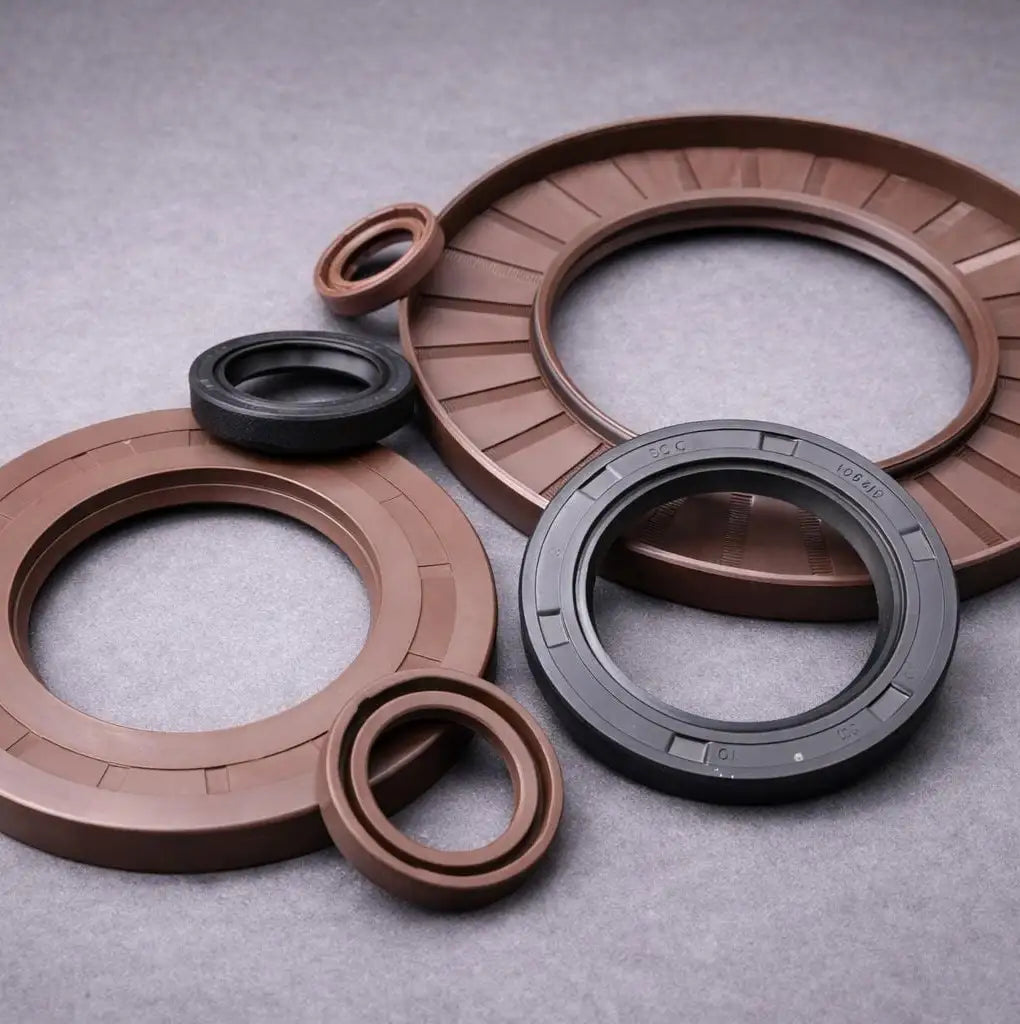
Kaybin manufactures custom oil seals and rotary shaft seals (radial lip seals) for lubricant retention and contamination exclusion in rotating industrial equipment. Seals are produced to confirmed shaft diameter, housing bore and seal width (ID × OD × W) and matched to lubricant type, shaft speed, temperature and environmental exposure.
This page covers rotary shaft sealing only for gearboxes, pumps, motors and rotating assemblies — not hydraulic cylinder piston, rod or wiper seals (reciprocating).
Rotary Sealing Function
Oil seals are installed between a rotating shaft and stationary housing to:
- Retain oil or grease within the housing
- Exclude dust, water and abrasive contamination
- Protect bearings and internal components
- Maintain lubrication integrity under continuous rotation
Correct lip design, compound selection and fit directly influence leakage control and service life.
Oil Seal Types & Configurations
- Single-lip oil seals – primary lubricant retention
- Double-lip oil seals – lubricant retention with secondary exclusion lip
- Dust-lip / auxiliary-lip seals – improved contamination control in dirty environments
- Spring-loaded (garter spring) seals – stabilised radial contact pressure (application dependent)
Seal geometry is selected based on shaft direction, contamination level and required retention stability.
Shaft & Housing Interface Requirements
Rotary seal performance depends on correct interface control:
- Shaft diameter tolerance and surface condition suitable for dynamic lip contact
- Housing bore fit to maintain radial stability
- Controlled shaft runout and concentricity
- Proper installation to prevent lip damage or distortion
Incorrect fit or poor shaft condition commonly leads to premature leakage or lip wear.
Operating Conditions
Oil seals are used in:
- Gearboxes and reduction drives
- Electric motors and pump shafts
- Agitators and mixers
- Rotating process equipment
- Industrial drive systems
Design review considers rotational speed, lubricant type (oil or grease), contamination exposure, temperature range and duty cycle.
Common Failure Causes (Rotary Applications)
Correct specification helps reduce:
- Leakage from worn shaft tracks
- Lip hardening or cracking from temperature
- Contamination ingress where dust lip is required
- Grooving of shaft surface
- Premature wear from misalignment or runout
- Installation damage
How to Measure & Specify an Oil Seal
Provide the following information for accurate manufacture or replacement:
- Shaft diameter (ID)
- Housing bore (OD)
- Seal width (W)
- Seal type (single, double, dust lip; spring-loaded if required)
- Lubricant type and temperature range
- Shaft rotational speed and duty cycle
- Contamination exposure (dust, water, slurry, washdown)
- Rotation direction (if relevant)
For replacement of worn or non-standard seals, a photo or sample assists reverse engineering.
Reverse Engineering & OEM Alternative Support
- Oil seal replacement for non-standard housings
- Reverse engineering of discontinued OEM designs
- Lip configuration selection for contamination control
- Duty-based compound selection
Industrial rotary sealing solutions supplied across South Africa and Africa.
Boundary Control
This page covers rotary shaft oil seals and radial lip seals only. It does not cover hydraulic cylinder piston seals, rod seals, wiper seals, chevron packing or static gaskets, which are addressed under their respective component pages.
Share