kaybin
Plastic Bushes & Bearing Bushes for Industrial Shaft & Pivot Applications
Plastic Bushes & Bearing Bushes for Industrial Shaft & Pivot Applications
Or email us directly at info@kaybin.co.za with the product name and quantity.
Plastic Bushes & Bearing Bushes for Industrial Shaft & Pivot Applications
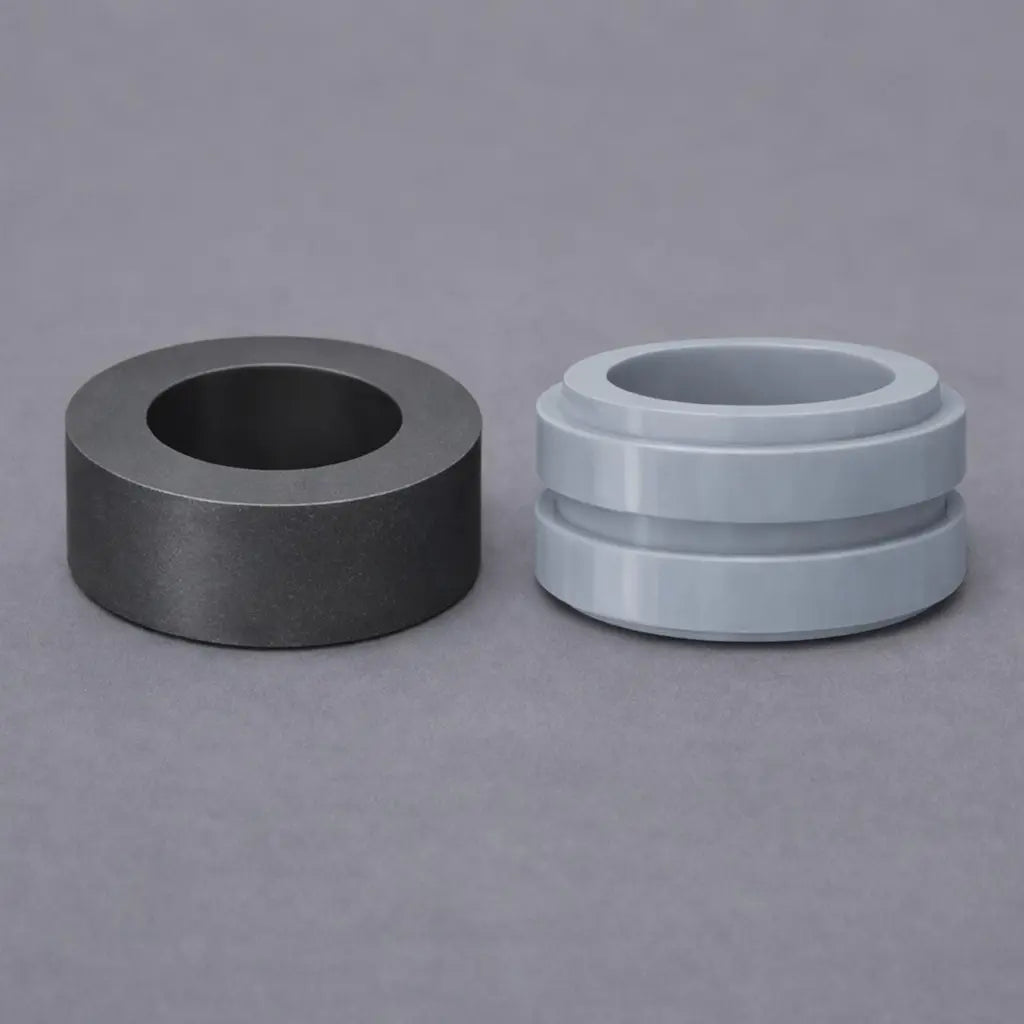
Kaybin manufactures precision-machined plastic bushes and polymer bearing bushes for rotating shafts, pivot points and oscillating assemblies where low friction, corrosion resistance and controlled wear are required.
These are rigid engineering plastic bushes — not rubber suspension bushes or polyurethane vibration mounts. Each bush is machined to drawing or sample and configured for load, speed, clearance and environmental exposure in industrial and OEM equipment across South Africa and Africa.
What Are Plastic Bushes?
Plastic bushes (also called polymer bushes, plastic bearing bushes or sleeve bushes) are cylindrical bearing elements installed between a shaft and housing to:
- Support radial load
- Reduce friction
- Prevent metal-to-metal contact
- Control alignment and wear
They are commonly used as a metal-replacement solution where bronze, brass or steel bushes would otherwise require lubrication or suffer corrosion.
Bush Types Covered
- Sleeve bushes (plain cylindrical)
- Flange bushes
- Plain bearing bushes
- Shouldered bushes
- Custom-machined geometries
This page excludes rubber suspension bushes, elastomer mounts and automotive components.
Industrial Applications
Plastic bushes are widely used in:
- Conveyor rollers and guides
- Packaging and filling machinery
- Pumps and valve linkages
- Mining and bulk handling equipment
- Agricultural machinery
- Food processing systems
- Automation and OEM assemblies
- Pivot points and hinge mechanisms
Suitable for rotating, oscillating or sliding motion.
Material Options & Performance Behaviour
PTFE Bushes
- Very low coefficient of friction
- Excellent chemical resistance
- Suitable for dry-running applications
- Used in aggressive media environments
Nylon Bushes (PA6 / PA66)
- High strength and toughness
- Good wear resistance
- Suitable for moderate load applications
- Moisture absorption considered in clearance design
Acetal / POM Bushes
- Excellent dimensional stability
- Lower moisture absorption than nylon
- Stable running clearance under controlled duty
- Good wear performance
UHMWPE Bushes
- Ultra-low friction
- High abrasion resistance
- Used in sliding and bulk handling systems
HDPE Bushes
- Chemical resistant
- Cost-effective for lighter-duty service
Material selection considers media compatibility, operating temperature, radial load, surface speed and required service life.
Plastic vs Metal Bushes
Plastic bushes are often selected instead of bronze or steel because they offer:
- Corrosion resistance
- Lower weight
- Reduced noise
- Lower maintenance
- Reduced galling risk
- Ability to operate without lubrication (material dependent)
Metal bushes may tolerate higher temperatures, but engineered polymers eliminate lubrication requirements in many industrial applications.
Nylon vs Acetal Bushes
Nylon: Higher impact resistance and toughness; suitable for shock loading where dimensional drift is manageable.
Acetal (POM): Greater dimensional stability; better suited to tight tolerance assemblies and moisture-sensitive environments.
Final material selection depends on duty cycle, environment and tolerance sensitivity.
Engineering & Specification Considerations
Plastic bush design typically evaluates:
- Shaft diameter and surface finish
- Housing bore tolerance
- Radial load classification (light / medium / heavy duty)
- Operating speed (rpm)
- PV value (pressure × velocity relationship)
- Running clearance
- Press-fit vs clearance-fit installation
- Thermal expansion characteristics
- Creep under sustained load
Incorrect specification may result in bush creep, ovalisation, seizure, overheating or spinning in the housing.
Common Failure Modes Addressed
Properly selected plastic bushes help prevent:
- Metal scoring
- Galling
- Shaft wear
- Noise and vibration
- Dry-running seizure
- Corrosion-related locking
- Lubrication starvation failures
Specification Inputs Required
To manufacture the correct bush, provide:
- Shaft diameter (ID)
- Housing bore (OD)
- Length
- Flange diameter and thickness (if applicable)
- Radial load estimate
- Operating speed
- Temperature range
- Media exposure (oil, water, slurry, chemicals)
- Shaft surface finish (if known)
Drawings, CAD files or worn samples assist accurate replication and reverse engineering.
Replacement & OEM Support
Kaybin supplies:
- Replacement plastic bushes
- OEM bush replication
- Conversion from bronze to polymer bushes
- Custom-machined bushes for discontinued equipment
- Small batch and production machining
Manufactured in South Africa for industrial and OEM equipment across Africa.
Share