kaybin
Plastic Ring Segments & Split Wear Rings for Large-Diameter Industrial Applications
Plastic Ring Segments & Split Wear Rings for Large-Diameter Industrial Applications
Or email us directly at info@kaybin.co.za with the product name and quantity.
Plastic Ring Segments & Split Wear Rings for Large-Diameter Industrial Applications
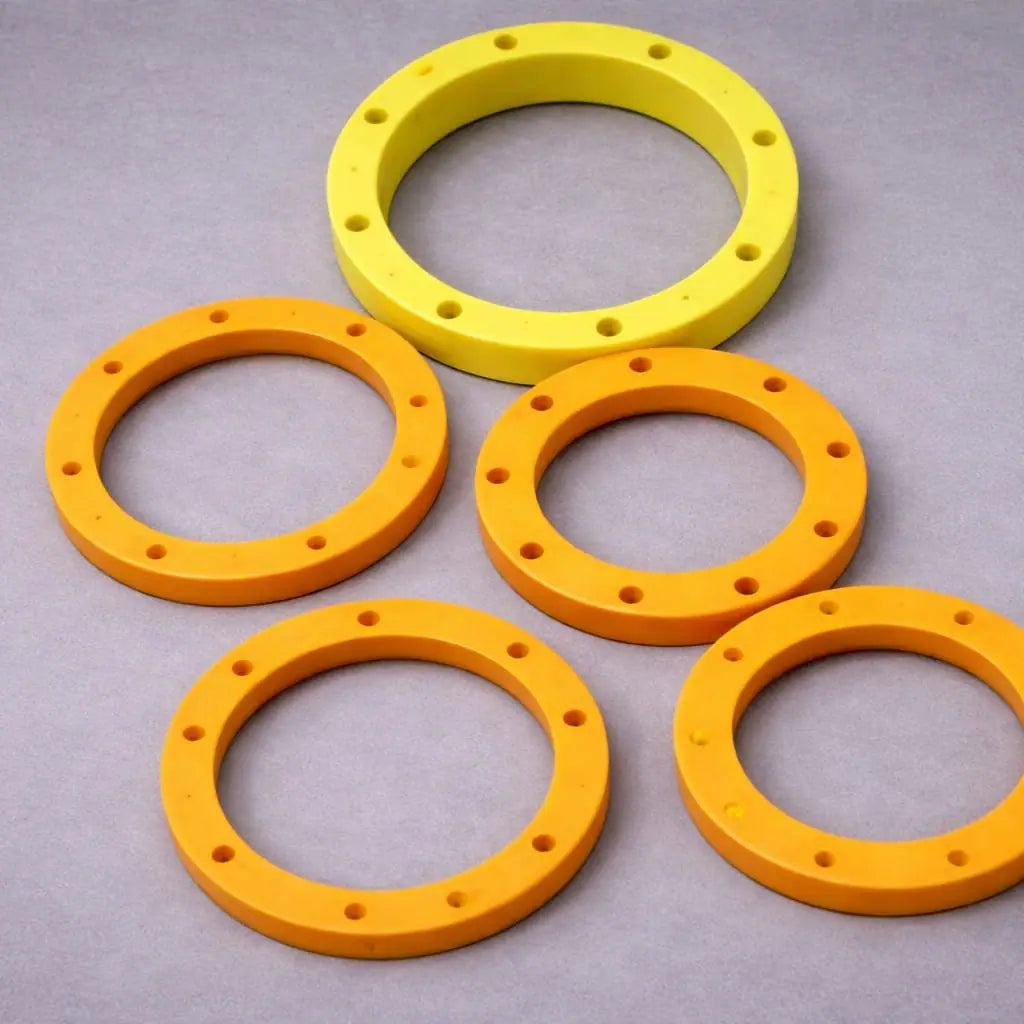
Kaybin manufactures custom plastic ring segments, segmented wear liners and split wear rings for large-diameter industrial equipment where one-piece rings are impractical due to transport, installation or thermal expansion constraints. Segments are precision machined to drawing or sample and assembled to form continuous wear, guide or sealing surfaces in heavy-duty machinery across South Africa and Africa.
This page covers industrial plastic ring segments and segmented liner systems only — not decorative rings or consumer hardware components.
Function & Typical Applications
Plastic segments are assembled to create:
- Segmented wear rings
- Split plastic wear rings
- Segmented sealing rings
- Drum and pulley liner segments
- Rotary table and slew ring wear segments
- Conveyor curve liner segments
- Large-diameter guide rings
Common industrial uses include mining drums, cement kilns, trommels, bulk material conveyors, rotary tables, thrust rings and heavy-duty processing equipment where abrasion resistance and modular replacement are required.
Material Options & Wear Behaviour
Segments are manufactured from engineering plastics selected according to load, friction and environment:
- UHMWPE / HDPE – very low friction and excellent abrasion resistance for conveyor and sliding wear segments
- Nylon (PA6 / PA66, filled grades) – higher load capacity for structural and guide ring segments
- Acetal / POM – dimensional stability for tighter clearance guide rings
- PTFE (Virgin & Filled) – chemical-resistant, low-friction sealing segments
- Polyurethane (PU) – impact-absorbing and shock-resistant segments for high-impact zones
- Polypropylene (PP) – chemical-resistant in compatible environments
Material selection considers compressive load, sliding velocity, thermal expansion, wear classification (abrasive vs adhesive), impact fatigue and environmental exposure.
Engineering & Installation Considerations
- Segment arc length and quantity for full ring assembly
- Thermal expansion gap allowance
- Bolt pattern spacing and shear load distribution
- Joint design (butt, step, overlap or dovetail)
- Radial and axial restraint to prevent migration
- Countersunk or recessed fasteners to minimise wear interference
Segmented construction reduces downtime, simplifies handling and allows selective replacement of worn sections instead of full-ring changeout.
Failure & Troubleshooting Context
Correctly specified plastic ring segments help reduce:
- Joint separation and wear steps
- Bolt loosening under vibration
- Thermal buckling on large diameters
- Segment creep deformation
- Abrasive grooving and edge chipping
- Ring eccentricity after installation
Specification Details Required
To manufacture the correct plastic segments, provide:
- Application type (wear ring, guide ring, sealing ring, drum liner, pulley liner)
- Inside and outside diameters of assembled ring
- Arc length and number of segments
- Segment width and thickness
- Mounting pattern (bolt size, spacing, PCD or groove style)
- Load classification and duty cycle
- Media and temperature range
- Installation constraints
CAD files (STEP / DXF) or a worn sample accelerate review and manufacturing.
OEM & Replacement Support
Kaybin supplies replacement wear ring segments, reverse-engineered segmented liners and custom large-diameter plastic rings for OEM and industrial equipment across South Africa and Africa.
Plastic ring segments are manufactured to match your application, material duty and fastening requirements for reliable operation in heavy industrial environments.
Share