kaybin
Scraper Blades & Plates
Scraper Blades & Plates
Or email us directly at info@kaybin.co.za with the product name and quantity.
Scraper Blades & Plates
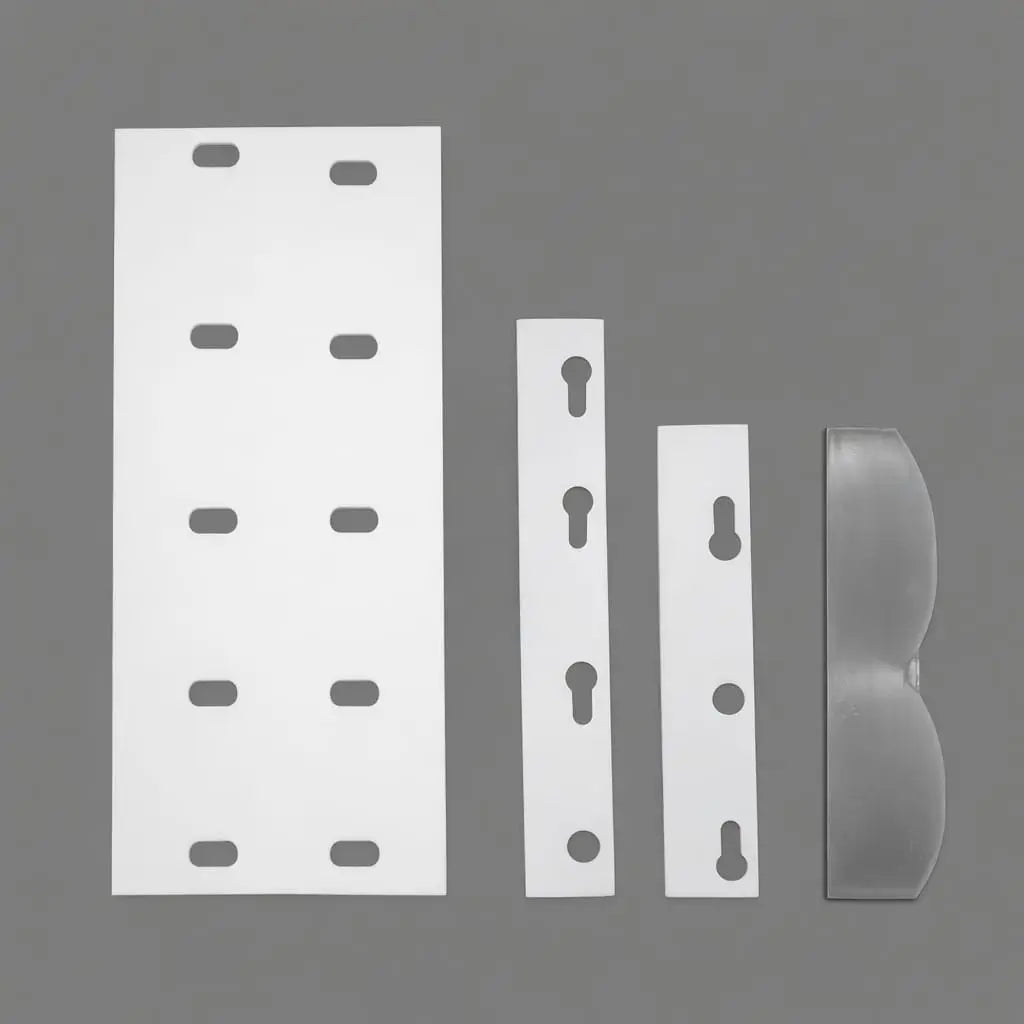
Kaybin manufactures custom scraper blades and scraper plates from engineering polymers for conveyor belt cleaning systems, bulk material handling equipment and process machinery. Components are cut or machined to drawing or worn sample to match belt width, mounting interface and duty conditions where carryback control, abrasion resistance and belt protection are critical.
This page covers replacement and retrofit scraper blades for primary, secondary and tertiary cleaning applications — not consumer cleaning tools.
Function & Typical Applications
- Removes carryback and material buildup from conveyor belts, pulleys and return runs
- Provides a replaceable sacrificial contact surface to prevent steel-to-belt damage
- Supports primary bulk removal at the head pulley
- Supports secondary cleaning for residual fines
- Used in mining, cement, aggregate, coal and bulk handling operations
- Also supplied as wear plates and liner segments for chutes, hoppers and mixers
Blade System Architecture
Primary Cleaner Blades
Installed at the head pulley to remove the majority of material immediately after discharge.
Secondary Cleaner Blades
Installed downstream to remove fine residual carryback and reduce buildup on return rollers.
Tertiary / Return-Side Cleaning
Additional cleaning where fine contamination remains or where return belt protection is required.
Cartridge / Segmented / Retrofit Systems
Supplied for clamp bars, quick-change cartridges and legacy systems. Discontinued or worn blades can be reverse-engineered from a sample.
Tungsten-tipped or reinforced variants may exist in industry; selection must consider belt construction and splice type.
Material Selection (By Wear Mode)
Abrasive Wear (Dry fines, gravel, ores)
Polyurethane grades selected for abrasion resistance and tuned stiffness.
Adhesive / Sticky Carryback (Cement, clay, tacky product)
Lower-adhesion urethane selection to reduce buildup and blade loading.
Sliding / Liner Applications
UHMWPE / HDPE used for low-friction wear plates and chute liners.
Structural / Backing Elements
Nylon or engineering plastics where higher stiffness is required.
Hardness is selected according to belt speed, duty severity and material handled. Final compound is confirmed during review of your operating conditions.
Operating Conditions
Scraper blades operate under continuous dynamic contact with moving belts. Wear rate and stability are influenced by:
- Belt speed and duty cycle
- Contact pressure method (spring, torsion, gravity or mechanical tension)
- Wet vs dry material conditions
- Fine vs coarse bulk size
- Abrasive particle loading
- Chemical exposure and washdown environments
- Outdoor UV exposure
Incorrect blade angle, over-tension or insufficient belt support can cause chatter, uneven wear and continued carryback.
Troubleshooting Quick Guide
Carryback remains:
Confirm primary vs secondary placement and correct blade angle/support.
Blade wearing too fast:
Review abrasive vs sticky duty classification and belt speed conditions.
Chatter or vibration:
Check mounting stiffness, tension method and belt tracking alignment.
Splice damage risk:
Confirm compatibility of blade stiffness and insert type with belt construction.
Grooving or marking:
Reduce contact pressure and confirm material suitability for belt cover hardness.
To manufacture a fit-matched blade, provide:
- Blade type (Primary / Secondary / Tertiary / V-plough / Plate)
- Full dimensions and profile geometry
- Mounting interface (clamp type, bolt pitch, cartridge system)
- Belt speed and duty cycle
- Material handled and environment
- Photos and, where possible, a sample for reverse engineering
Kaybin then confirms the appropriate polymer grade, hardness approach and geometry before machining your replacement.
Share